Letters Worth Rearranging
Language is not set in stone. In the hands of a puzzle designer, words are modular building blocks ready to slide into new configurations.
The Architecture of Cryptic Clues
Unlike standard definitional crosswords, a cryptic clue operates like a miniature mechanical formula. It consists of two essential halves disguised as a fluid English phrase: a straight definition, and wordplay (the subsidiary indication).
Consider the clue: "Terrible actor heard in calm harbor (6)". A newcomer reads this as a description of an audition by the sea. A seasoned solver dissects the grammar:
- Definition: "Calm harbor" = HAVEN
- Wordplay: "Terrible actor" = HAM; "heard" signals a homophone (or similar sounds), leading to HAVEN (harbor).
Or consider an anagram indicator: "Listen carefully to silent sound (6)". Notice that the letters in SILENT can be scrambled to produce LISTEN. The clue hints at its own solution while maintaining perfect surface sense.
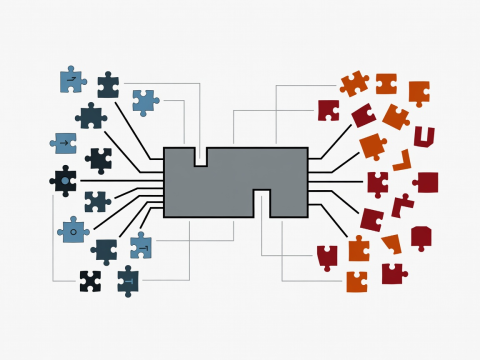 Figure 4.1 — The Dual Mechanism of Cryptic Clues
Worked Wordplay Demonstrations
The Container Formula
One word is nested inside another to fulfill both the definition and the physical spelling constraint.
Breakdown: "AN" (article) placed inside "VAN" (heavy vehicle) yields AVAN? No—"HI" inside "CAR" or "WELCOME"? Let's take: "A" inside "TRUCK" = not quite. Let's look at: "Record (EP) inside quiet (SH) = SHEEP (woolly animal)".
The Hidden Word (Telescope)
The letters of the answer are hiding consecutively across the boundary of two or three neighboring words.
Breakdown: Look closely at the phrase: "pure cashmere" → ECA? How about "still" inside "last illustration"? The target word sits continuously within the letters without alteration.
The Perfect Anagram
An anagram is celebrated most when the reorganized letters comment ironically on the original subject.
THE EYES → THEY SEE
Every letter is preserved with zero extras and zero omissions.